
At Queen's Park, a Clear Signal: Cybersecurity Is Now a Leadership Issue
There are moments when a room shifts from conversation to clarity. Earlier this week at Queen's Park was one of those moments.
Leaders gathered to talk about cybersecurity in an AI-enabled world. But what emerged was something bigger: a shared recognition that this is no longer a technical challenge. It is a leadership one.
Setting the Tone: Cybersecurity as Sovereignty
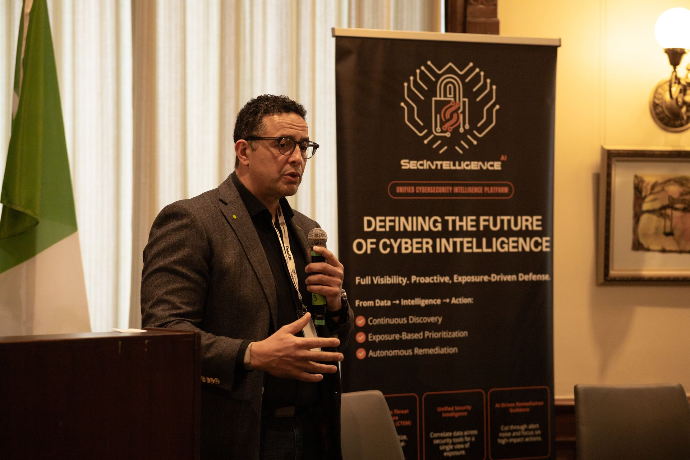
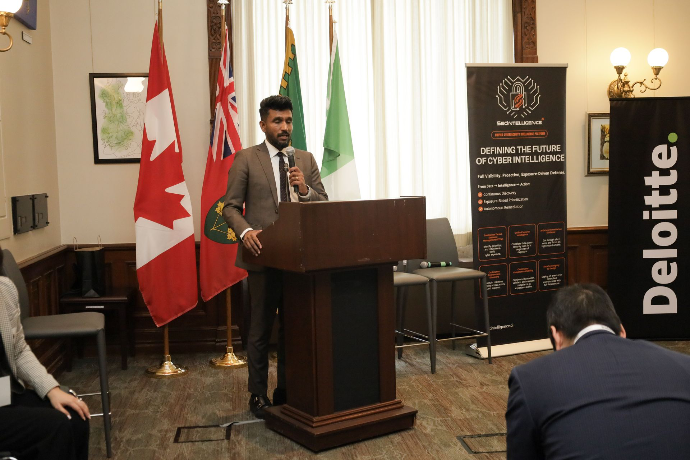
Amir Belkhelladi, National Leader Sovereign AI (Deloitte) opened the session with a reframe that set the tone for everything that followed. Cybersecurity, he argued, is not a technical issue. It is a question of sovereignty. "Sovereignty is in the eye of the beholder," he noted, but what we are now being asked to protect has shifted. It is no longer just infrastructure or data. It is intelligence itself.
That reframe matters. Because in a world of constant vulnerabilities, cybersecurity cannot be episodic. It has to be continuous. It has to be about understanding weaknesses in real time and responding daily, not after the damage is done.
The Real Question: Will We Lead?
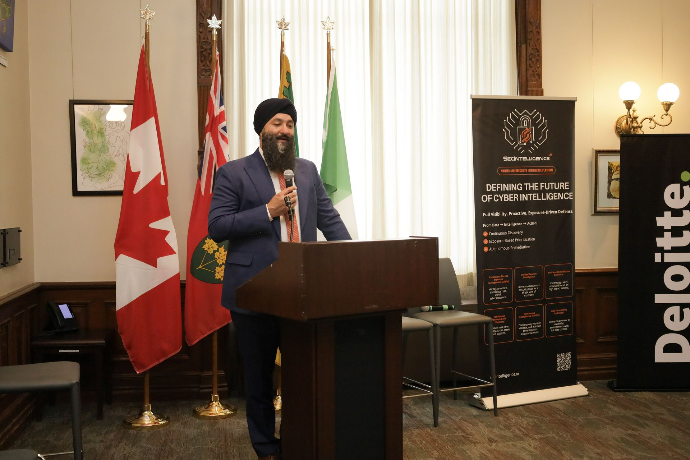
The Hon. Stephen Crawford, Minister of Public and Business Service Delivery and Procurement's keynote brought the conversation into sharp focus. His message was direct: Ontario has a choice. We can lead in the AI economy, or we can fall behind.
AI is already reshaping industries, and with that transformation comes both opportunity and compounding risk. The role of government, as the Minister framed it, is not to create wealth directly but to create the conditions where businesses and institutions can thrive. That means building public trust in digital systems, ensuring data is handled responsibly, and strengthening cybersecurity resilience across every sector. With cyber breaches costing the economy an estimated $6.7 billion, the stakes are not theoretical.
What stood out most was the Minister's call for a genuine mindset shift. We need to take more risk — not recklessly, but deliberately. Because standing still is no longer a safe option. Hesitation, at this point, carries its own cost.
What Leaders Are Seeing on the Ground
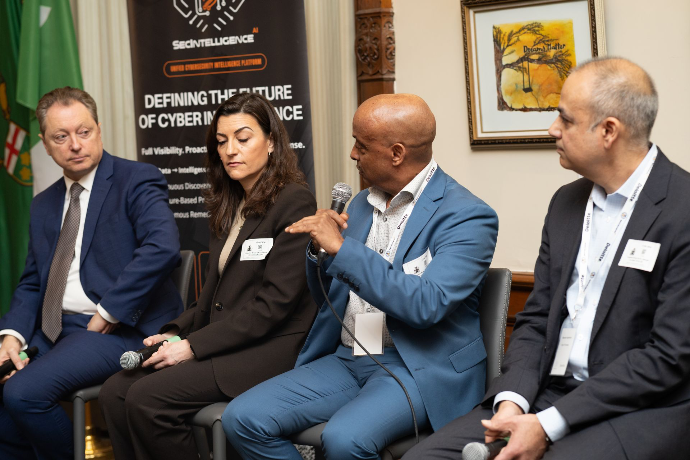
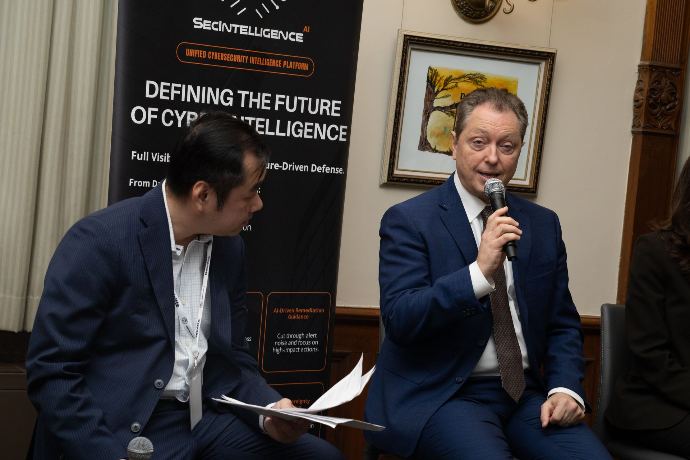
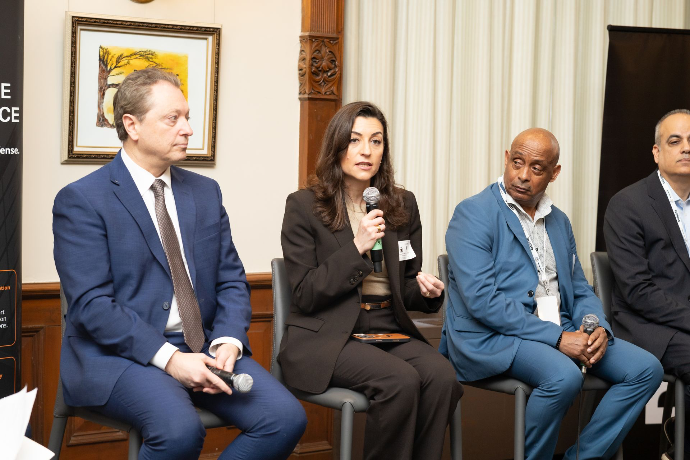
If the keynote set the direction, the panel made it real. Moderated by Tylor Truong, Partner at Deloitte, the discussion brought together four leaders working at the frontlines of public sector cybersecurity: Minister Crawford, Daniela Spagnolo (Chief Information & Security Officer, Government of Ontario), Medhanie Tekeste (CIO, City of Brampton), and Maneesh Agnihotri (CISO, City Of Toronto). What followed was one of the most candid and practical conversations of the day.
Daniela Spagnolo put the scale of the challenge in concrete terms. The Ontario government is currently monitoring over 1.6 trillion events. At that volume, human effort alone is simply not enough. Effective protection means deploying machines, AI, and systems that operate at the same speed as the threats themselves. Cybersecurity at this scale is not a technical function. It is an economic imperative.
Medhanie Tekeste raised a question that many in the room recognized immediately: how do you build policy frameworks that protect systems while still moving at the speed innovation demands? Traditional procurement and governance models were not built for the pace of AI and modern cyber threats. Brampton is pushing toward more agile processes, and the Province is exploring centralized procurement and shared services to accelerate decision-making. The logic is straightforward: if innovation moves faster than our ability to adopt and secure it, we lose ground on both fronts.
Maneesh Agnihotri captured the operational reality with a sequence that has become anything but sequential: discover, access, mediate, prevent. These steps no longer occur in the same order. They happen in parallel. Cybersecurity today is about identifying gaps quickly and making decisions even faster. Toronto is also creating deliberate space for Canadian companies to present their solutions, reflecting a broader recognition that the talent and innovation are already here. The work is to scale them.
Across all three perspectives, one theme surfaced repeatedly: collaboration. Cybersecurity cannot be solved by any one organization, city, or level of government. It requires coordination across all of them. We are only as strong as our weakest link, and in a connected ecosystem spanning cities, provinces, and partners, that link is rarely isolated.
Backing What's Already Here
Running quietly beneath the larger conversation was a point worth naming directly. Canada, and Ontario in particular, already has the talent, the research, and the innovation needed to lead in this space. From the Province's "Buy Ontario" approach to municipalities creating room for homegrown companies to compete, the intent is clear. The gap is in execution. If we do not build the conditions for local innovation to grow and scale, others will fill that space.
Where This Leaves Us
By the end of the day, one thing was evident: cybersecurity is not about systems alone. It is about trust. Trust in institutions, trust in technology, and trust in the people making decisions on behalf of the public.
Protecting that trust requires systems that scale with the threat, governance that keeps pace with change, genuine collaboration across organizations, and leaders willing to act before every answer is in hand. Ontario has made a strong start in AI. The opportunity now is to lead just as boldly in securing it.
A Note of Thanks
None of this happens without the right people in the room.
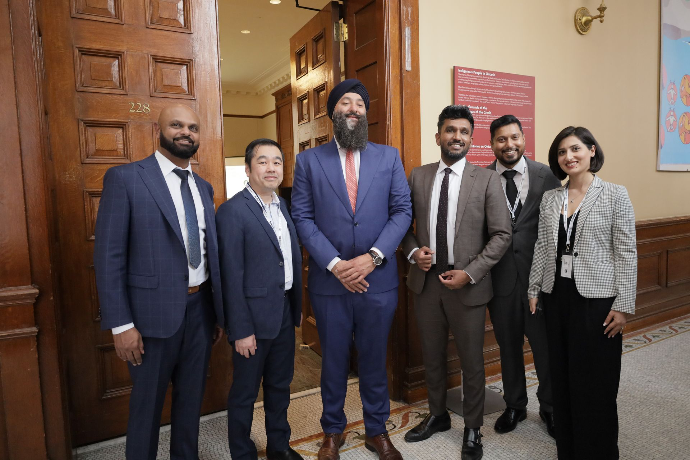
Thank you to Minister Stephen Crawford for anchoring the day with clarity and conviction, and to the Hon. Vijay Thanigasalam, Associate Minister of Mental health and Addictions and Minister of Transportation, the Hon. Prabmeet Singh Sarkaria, for joining us and lending their support to a conversation that needed to happen at this level.
To our partners at Deloitte Canada: your grounded, practice-based perspective moved the room from principle to action, and it showed. To Daniela Spagnolo, Medhanie Tekeste, and Maneesh Agnihotri: thank you for speaking candidly from the front lines, where the weight of these decisions is very real. To Amir Belkhelladi for an opening that set the frame for everything that followed, and to Tylor Truong for keeping the conversation focused and productive throughout.
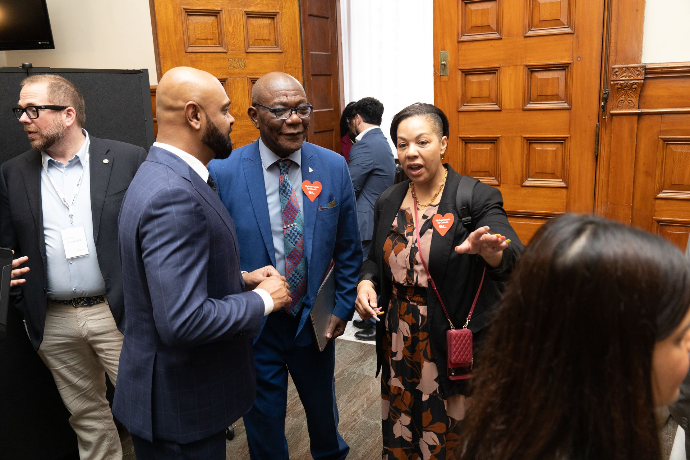
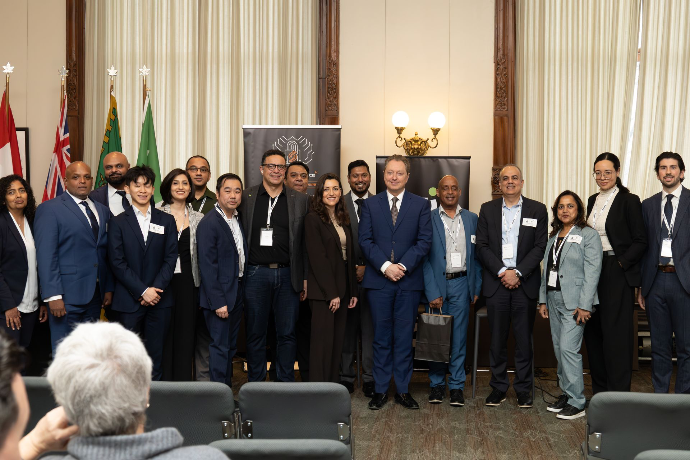
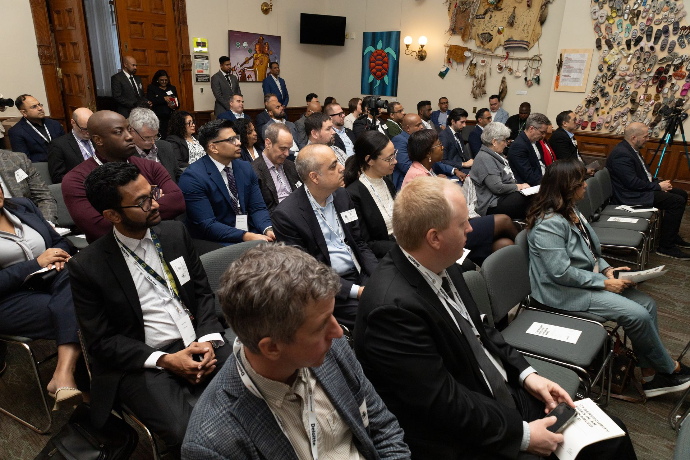
To every leader who made time to be in that room: your presence made this more than a session. It made it a signal.
The conversation at Queen's Park was not about fear. It was about readiness. Cybersecurity is not a future challenge. It is shaping how we operate, govern, and compete right now. Resilience in an AI-enabled world is not built once. It is built continuously. And the decisions we make today will define how secure and how competitive we are tomorrow.
Ready to Move from Awareness to Action?
The conversations at Queen's Park confirmed what many already know: the complexity is real, the stakes are high, and the window for reactive security has closed.
SecIntelligence AI was built for this moment. It gives government and enterprise security teams a single, consolidated view across their environments, enabling them to detect threats faster, respond in real time, and maintain the continuous awareness today's landscape demands. If this conversation resonated with you, we would welcome the chance to continue it.